



By: McKenna Ownby, Milk Donor
From the moment I found out I was expecting my first baby, everything in my life went into preparation mode. I bought must haves and gadgets, changed my habits, read books, took classes and hired a doula. I was as prepared as I could possibly be—or so I thought.
Now, two years into motherhood, I’ve realized that you can’t plan for everything—or anything, really—when it comes to babies. While all that prep was certainly beneficial to my mental health in some ways, nothing could have fully prepared me for challenges I faced when it came to breastfeeding.
It seemed like most moms I knew could breastfeed with ease. Before I was pregnant, I remember being so impressed by their abilities to effortlessly calm their babies with a quick feed. I tried to be optimistic during pregnancy, telling myself it would probably take a few days for me (and baby) to get in a groove, and after that, it would be smooth sailing. I bought a breast pump, asked my doula for tips on how to use it, and did a few practice sessions in my third trimester before trying to put it all out of my mind.
Even though I thought I was completely prepared, our journey turned out different than I hoped or expected. If I could go back and give my newly postpartum self any advice, I’d say two things: (1) avoid setting any expectations, and (2) pumping for your baby will give you a sense of fulfillment you never saw coming, and never knew you needed.
In the beginning of this journey, I never thought I would make it to the six-month mark with pumping, and by sharing my story, I hope I can normalize exclusive pumping as an option for moms facing similar challenges.
Birth:
All in all, the process of giving birth was better than I expected, and after 19 hours, my beautiful, healthy baby girl Mya entered the world. After a few minutes of blissful cuddles, we attempted our first latch. Pure exhaustion and intense postpartum chills made it impossible for me to hold her in place, so my husband, Jon, had to take over and gave our daughter her very first feeding of my colostrum with a spoon. I hoped we’d have more success over the rest of our hospital stay, but with each attempt we faced challenges, and pain. Luckily our hospital had donor milk to help us supplement when she wasn’t getting enough from me.
The care team tried to assure me that we would both catch on, but after we got home the challenges continued and a constant stream of doubt flooded my mind with each feeding. Should I have tried harder on our first latch attempt? Or the other attempts in the hospital? Am I using this nipple shield correctly? I wish someone would have told me, “It should get easier, but if it doesn’t, don’t worry. There are other great options to choose from when it comes to feeding your baby.”
One to four weeks:
Once we got home and my milk fully came in, I repeated the following cycle every two to three hours:
- Place a few drops of milk into a nipple shield. Place the shield on me.
- Prop baby in perfect position with a nursing pillow.
- Attempt to latch.
- Repeat for about 10 minutes—either until baby would latch (sometimes) or we both ended up in tears (most of the time).
- Ask someone to hold baby, pump for 15 minutes, and feed baby what I pumped from a bottle. I ended up pumping between 10 to 12 times per day during this time.
This process would often take up to an hour, which didn’t leave me with much time to enjoy actually being with my baby. I came to dread feeding time, and more negative thoughts clouded my mind. What am I doing wrong? Is my baby rejecting me? All of this piled on and I started feeling postpartum depression creep in.
After trying for two months, facing challenges with tongue tie, and seeing lactation consultants, it was still not working, and I felt like I was running out of options. Then I made a choice that changed everything for us.
One to four months:
Sleep deprived and feeling more hopeless by the day, I decided one morning to feed Mya straight from a bottle instead of trying to latch her first. We both felt instant relief and for the first time I felt at peace during a feed. I realized she was getting the same milk she would be if we were able to latch, just in a different way. That week, I dropped to latching just a few times per day and bottle feeding the rest. I also ordered a hands-free pump so I could move around and feel productive during sessions. I pumped while we gave her a bottle and was fortunate to produce more milk than we needed. Our freezer was filling up fast.
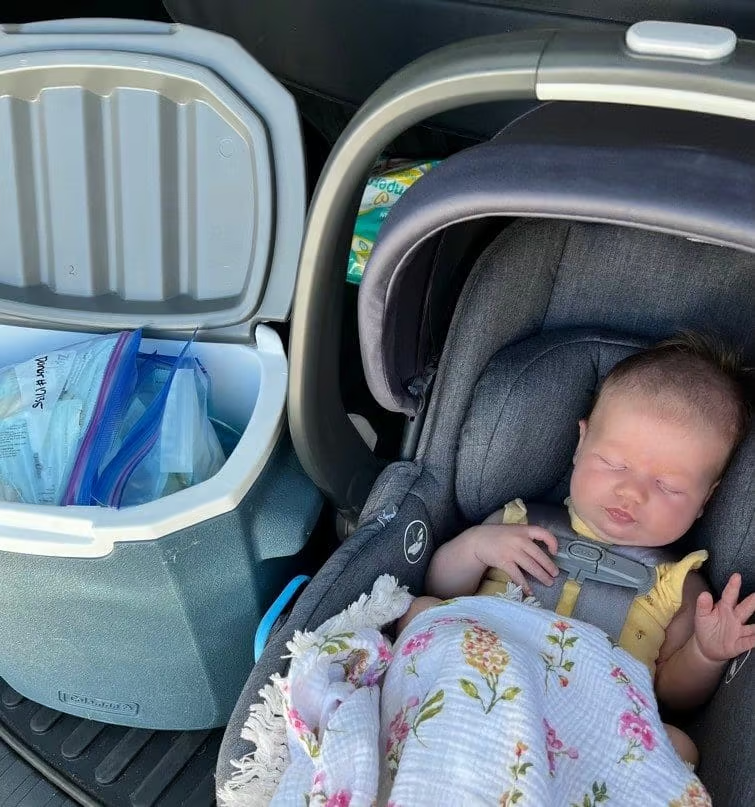
At the suggestion of my fantastic midwife, I found Mothers’ Milk Bank. A quick verbal screening and blood test later, I was approved to start donating my extra milk to fragile infants in hospitals all over the country. I remembered what a relief it was to have access to donor milk as a new mom struggling to feed my baby in the hospital, and I wanted to provide that same sense of comfort to other mamas and babies. Through Mothers’ Milk Bank, Mya and I dropped off our first donation to the Neonatal Intensive Care Unit of our local hospital when she was two months old.
Four to six months:
We continued to make regular donations in the months that followed, even as I decreased my pumping sessions. Sometimes we’d drop milk off at the hospital and sometimes we’d schedule a pickup right from our front door. The process couldn’t have been easier. Here’s how it worked:
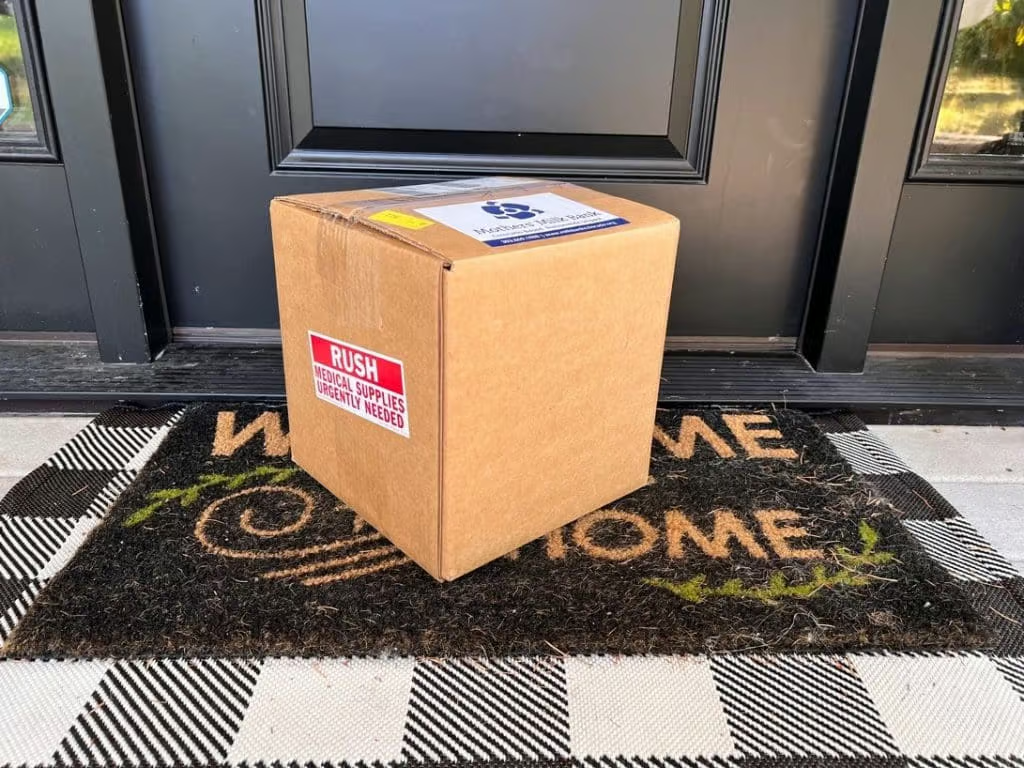
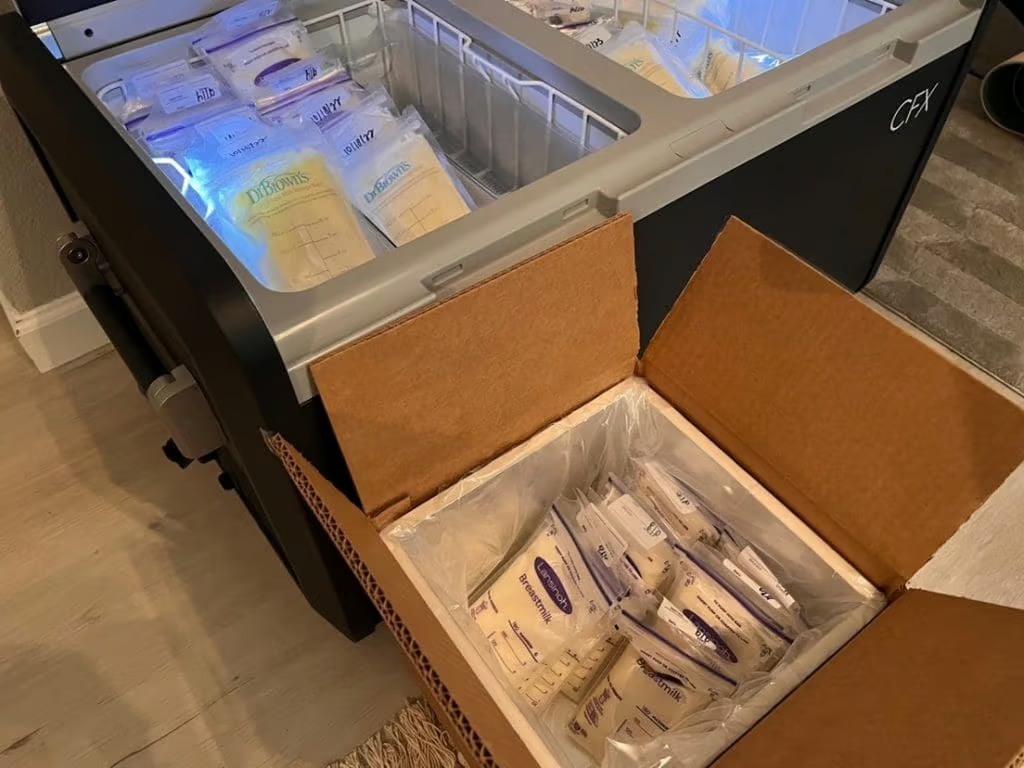
I contacted Mothers’ Milk Bank to request a box for my next donation. I provided my address and the estimated amount I wanted to donate, then an empty box would show up later that week.
Inside the insulated box, I found steps with a phone number to contact FedEx to schedule a pickup time, a special ice pack to place in my freezer until I was ready to ship my donation, and packing instructions that explained how to secure my frozen milk.
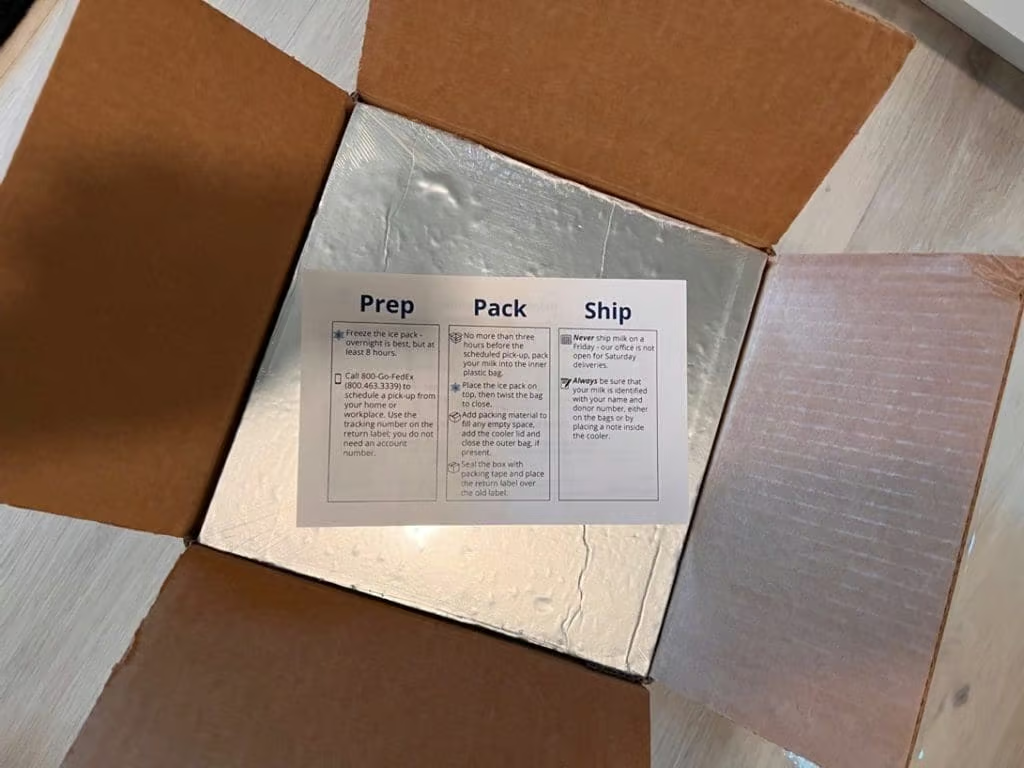
I packed the milk I wanted to donate inside the box, followed the instructions to label and seal my bags, and placed the provided ice pack on top of the bags. FedEx would pick up my box within two hours, and more than once, I received a phone call from Mothers’ Milk Bank the following week to confirm that my precious cargo had been received.
Six to 12 months:
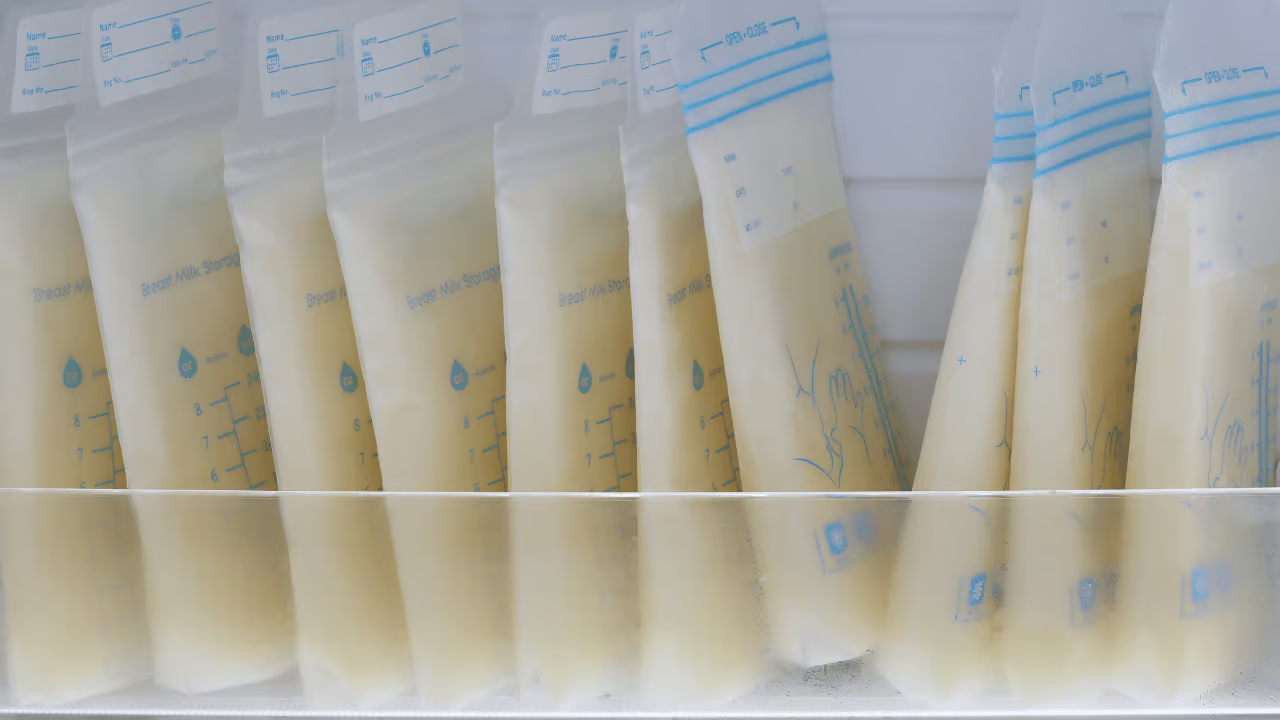
Over Mya’s next six months of life, my supply began to regulate even more. At nine months, I decreased my sessions once again and was fortunate that this had no negative impact on my production levels. I was producing just enough to maintain her daily bottles, which was about 30 ounces. This meant that I didn’t have much of an oversupply to continue donating milk on a regular basis, but I continued to safely store anything extra I could capture in our spare freezer.
12 to 14 months:
At the start of my pumping journey, my goal was to make it to six months. After some getting used to, pumping became like clockwork and my goal started to seem more and more doable. It was just another part of our everyday routine. While I wouldn’t say it was always easy, it was manageable for me. As Mya’s first birthday came and went, I was so proud of the progress we made in the span of 12 months. My mindset changed from being completely defeated at the thought of breastfeeding to knowing that my daughter was happy, nourished, and thriving. It was also a huge bonus that my husband and other family members were able to bond with baby by helping out with feeds—something that wouldn’t have been possible if I were nursing traditionally.
I could have easily stopped pumping once we hit that first goal, but I decided to keep going. I didn’t mind doing it, and I knew it would benefit my daughter. The final goal in my pumping journey was to pump until 18 months, and I’m proud to say that Mya and I made it! After I hit that major milestone, I felt fulfilled and decided my pumping journey was complete. I went from being an overwhelmed and exhausted brand new mom who didn’t think I’d make it to the end of my first week of pumping, to persevering all the way to a year and half. Pumping can absolutely take a toll on moms, and by no means do I think anyone should force themselves to do so if it becomes too mentally or emotionally taxing. But for me, it was the single most empowering thing that made me more confident as a mother.
Mothers’ Milk Bank offers free lactation support to new and expecting parents through its weekly Baby Café program.